

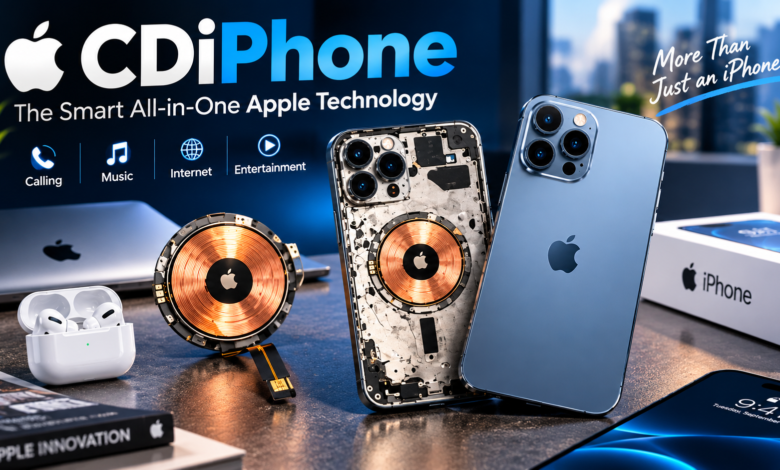
Apple has built a connected technology ecosystem that allows people to communicate, work, create content, and manage everyday tasks across multiple devices. An iPhone can work alongside a Mac, an iPad, an Apple Watch, and services such as iCloud to create a more convenient digital experience.
The term CDiPhone has appeared in online technology discussions as a concept for a more unified Apple experience. It is sometimes described as an all-in-one device or platform that could bring smartphone communication, computer-like productivity, entertainment, artificial intelligence, and connected services together.
However, an important distinction is necessary: Apple has not officially announced a product called CDiPhone. The term does not identify a confirmed Apple device with an established set of specifications. Instead, its all-in-one interpretation is best understood as a technology concept inspired by the broader idea of connected devices.
This guide explores what CDiPhone means, how the concept relates to Apple’s existing ecosystem, which features such a platform might include, and what benefits and limitations users should consider.
What Is CDiPhone?
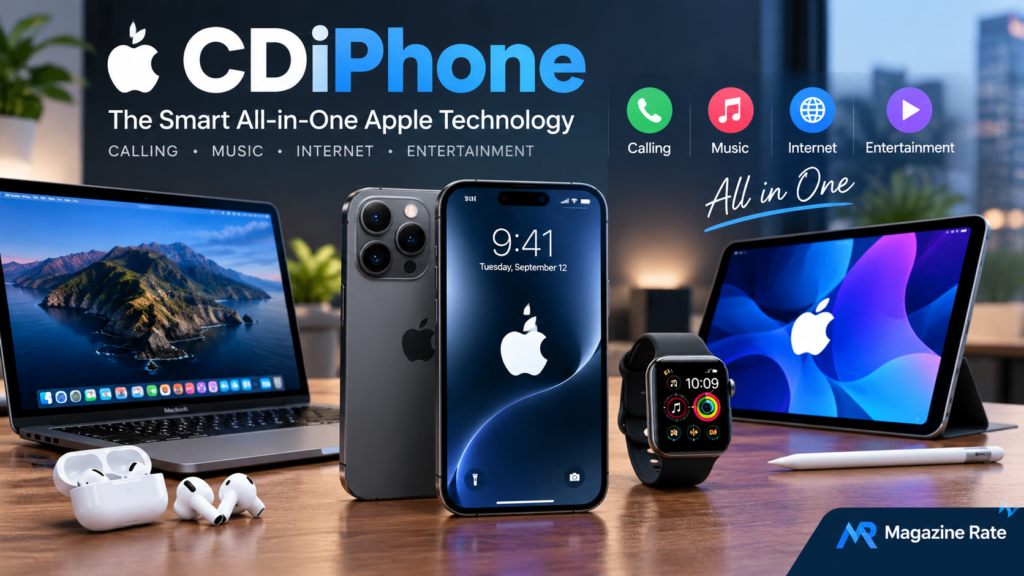
CDiPhone is an unofficial technology concept that imagines a unified Apple experience combining capabilities commonly associated with the iPhone, iPad, Mac, Apple Watch, and Apple’s digital services.
Rather than functioning as just another smartphone, the concept emphasizes making different technologies work together as one coordinated system. The goal would be to reduce the need to switch between devices while keeping personal information, communication, files, and applications accessible when needed.
For example, a user might begin writing a document on an iPhone, continue editing it on a Mac, and review it on an iPad without manually transferring files. Apple’s existing ecosystem already supports many workflows like this, although the devices remain separate products.
The CDiPhone concept takes that idea further by imagining an even more unified experience.
It is important to distinguish this interpretation from other uses of the term. In some online discussions, CDiPhone may refer to older CDMA-based iPhones, designer phone cases, or claims about diagnostic and storage technologies. These meanings should not automatically be treated as descriptions of an official Apple product.
| 🔗 You may also like: |
| DigitalRGS Everything Apple |
| Best Wireless Earbuds Under 200 in 2024 |
Why Is the CDiPhone Concept Attracting Attention?
People increasingly expect their digital tools to work together rather than operate as isolated products. They want messages, documents, photos, schedules, and other information to remain available across their devices.
Apple already addresses many of these expectations through its software and services. The CDiPhone concept builds on the appeal of having those capabilities feel like parts of a single digital environment.
Several technology trends help explain the idea’s appeal.
-
Connected devices: Smartphones, computers, tablets, watches, and smart home products increasingly communicate with one another.
-
Artificial intelligence: AI-powered features can help users organize information, complete tasks, and interact with software more naturally.
-
Cloud computing: Cloud services make it possible to access files and information across supported devices.
-
Digital productivity: People want smoother transitions between personal communication, work, education, and creative activities.
-
Privacy and security: Users expect connected services to protect their personal information while making it accessible when authorized.
These trends explain why a unified technology concept may sound appealing. They do not, however, confirm that Apple is developing a product named CDiPhone.
The Core Idea Behind CDiPhone
The central idea behind CDiPhone is integration. Instead of treating a smartphone, tablet, computer, and smartwatch as completely separate tools, this concept imagines a system in which their most useful capabilities work together more naturally.
A practical version would not necessarily require Apple to build one physical device that replaces every product. It could instead involve a more unified software experience, shared services, intelligent task management, and smoother transitions between devices.
One Connected Digital Environment
Imagine starting your morning by checking your calendar on your iPhone, reviewing a presentation on your Mac, and receiving important reminders on your Apple Watch. A more unified experience could make these transitions feel increasingly natural.
Apple already provides several features that support this approach. Handoff lets users continue supported activities on another device, while AirDrop transfers files wirelessly between compatible Apple devices. Universal Clipboard allows users to copy content on one device and paste it on another.
The CDiPhone concept builds on the same general principle: technology should adapt to the user’s workflow instead of forcing the user to manage every device separately.
Potential Features of CDiPhone
Because CDiPhone is an unofficial concept rather than a confirmed product, its features should be understood as possibilities, not specifications. The following examples describe what a more integrated Apple experience could offer.
1. Seamless Integration Across Apple Devices
Device integration would be one of the most important aspects of a CDiPhone-style platform.
Users could potentially move between communication, productivity, and entertainment activities without repeatedly opening files, transferring information, or configuring their devices. A shared experience could make it easier to access relevant content wherever they are working.
Apple already supports several similar capabilities through Continuity. For example, an iPhone can serve as a webcam for a Mac, and supported devices can share keyboards, files, and other resources.
The potential improvement would be to make these individual capabilities feel more consistent and easier to manage from one place.
2. Artificial Intelligence and Personal Assistance
Artificial intelligence could play a significant role in a future unified technology experience. Instead of requiring users to manage every task manually, an intelligent assistant could help organize information and suggest relevant actions.
Potential applications might include:
-
Summarizing selected messages and documents.
-
Helping users organize schedules and reminders.
-
Finding information across authorized personal content.
-
Assisting with writing, editing, and brainstorming.
-
Suggesting useful actions based on a user’s current task.
Apple already offers Apple Intelligence features on supported devices, although availability varies by device, language, region, and software version. These existing capabilities should not be confused with hypothetical CDiPhone functions.
A future integrated experience might make AI assistance more consistent across devices. For instance, a user could begin planning a project on an iPhone and continue organizing its documents on a Mac.
Any such experience would still depend on the software, hardware, permissions, and services Apple actually provides.
| 🔗 You may also like: |
| Techtrendery Com USA |
| Latest Breakthroughs in Quantum Computing 2024 |
3. Cloud Storage and Information Synchronization
Cloud services are essential to an ecosystem that connects multiple devices. They allow users to access supported information without relying entirely on files stored locally on one device.
A CDiPhone-style experience could place greater emphasis on having documents, photographs, notes, calendars, and other personal content available when needed.
Apple’s iCloud services already support synchronization for compatible apps and content. However, synchronization does not mean that every file or application automatically works identically across every device.
A more unified platform could make it easier to understand which information is synchronized, which files are stored locally, and which services require an internet connection.
Users would also benefit from clear controls over storage capacity, account access, backups, and data sharing.
4. Communication in One Connected Experience
Communication is another area where deeper integration could make everyday technology easier to use.
A unified experience could bring together messaging, email, video calls, contacts, and notifications while allowing users to select the most appropriate device for each activity.
For example, someone could receive a message on an iPhone, respond to it on a Mac, and join a video call from another compatible device.
Apple already supports cross-device calling and messaging in certain configurations, as well as Continuity features that help users move between supported activities.
The potential value of the CDiPhone concept lies in making these interactions more consistent, rather than claiming that a new communication system already exists under that name.
5. Productivity and Multitasking
A unified Apple experience could be particularly useful for people who regularly switch between personal and professional tasks.
Consider a freelancer preparing a client presentation. They might collect ideas on an iPhone, edit images on an iPad, prepare slides on a Mac, and review the final document before a meeting.
A more integrated platform could simplify this workflow by making recent files, relevant applications, and project information easier to access.
Potential productivity improvements include:
-
More convenient transitions between supported applications.
-
Better organization of documents and project files.
-
Easier access to calendars and reminders.
-
Improved collaboration through shared files and notes.
-
More consistent task management across devices.
These benefits would depend on how well the software supports individual workflows. Simply combining more features would not automatically make a system more productive.
6. Entertainment and Digital Media
Entertainment could also form part of an all-in-one technology experience.
Users might want to listen to music while working, watch videos on a larger screen, read books on a tablet, or continue a game on a compatible device.
Apple already offers services and features for music, video, books, gaming, and wireless media sharing. A unified experience could make it easier to move between these activities and manage content across compatible devices.
For example, someone watching a video on an iPhone could use AirPlay to stream supported content to a compatible television or other receiving device.
A CDiPhone concept could place these experiences within a more consistent interface, but there is no confirmed CDiPhone entertainment platform or subscription service.
7. Privacy and Security
Privacy would be a critical consideration for any platform that connects personal communications, files, devices, and AI-powered features.
A well-designed system would need to protect account credentials, restrict unauthorized access, and provide understandable controls over personal information.
Potential priorities could include secure device authentication, encrypted communications where supported, permission-based access, and clear choices about cloud processing.
Apple already provides security and privacy features across its products, but the protections available vary by service and activity. A hypothetical CDiPhone platform would need to specify how its own features work before its security could be evaluated.
Users should not assume that a concept is inherently more secure simply because it is associated with Apple. Security depends on the actual implementation, software updates, account protection, and user practices.
What Makes CDiPhone Different From a Traditional iPhone?
A traditional iPhone is a defined product with established hardware, software, and supported features. CDiPhone, when used to describe an all-in-one Apple concept, is a broader idea about how connected technology might work.
The main difference is therefore the scope of the concept, not a verified hardware advantage.
| Aspect | Traditional iPhone | CDiPhone concept |
|---|---|---|
| Product status | Official Apple product | Unofficial concept |
| Primary role | Smartphone and mobile computing | Imagined unified digital experience |
| Device integration | Existing supported ecosystem features | Potentially deeper integration |
| AI capabilities | Features available on supported devices | Hypothetical broader coordination |
| Hardware specifications | Published for individual models | No confirmed specifications |
| Availability | Sold through official and authorized channels | No confirmed product to purchase |
This distinction matters because online articles may describe CDiPhone as if it were a new device with established capabilities. Without an official announcement or reliable product documentation, those claims should be treated cautiously.
Potential Benefits of the CDiPhone Concept
If a future platform delivered more seamless integration across devices, it could offer several practical benefits.
Greater Convenience
Users would spend less time moving between applications, locating files, and managing separate workflows. A consistent experience could make everyday activities easier, especially for people who already use several compatible devices.
Improved Work Efficiency
Professionals could benefit from smoother transitions between communication, research, document editing, and collaboration. The greatest advantage would come from reducing interruptions rather than simply adding more features.
Better Organization
A more coordinated interface could help users manage schedules, notes, reminders, and project information. Intelligent search and recommendations might make important information easier to find.
More Consistent User Experience
A unified approach could reduce differences between supported applications and services. Users might find it easier to understand how information moves between their devices.
These are potential benefits, not proven outcomes of an existing CDiPhone product.
Who Could Benefit From a Unified Apple Experience?
The concept could appeal to several groups, although its usefulness would depend on the features ultimately available.
Students could benefit from easier access to study notes, digital textbooks, calendars, research documents, and collaborative assignments across compatible devices.
Professionals could use a connected workflow to manage emails, meetings, documents, and client communication without repeatedly transferring information between devices.
Designers, photographers, and content creators could benefit from smoother movement between capturing content, editing files, reviewing work, and sharing finished projects.
Everyday Users
People using several Apple devices could appreciate simpler access to messages, photos, entertainment, reminders, and compatible smart home controls.
Limitations and Challenges of an All-in-One Technology Concept
Although the idea sounds convenient, a genuinely unified platform would face several technical and practical challenges.
Hardware Limitations
A smartphone cannot provide every advantage of a laptop or tablet in the same physical form. Screen size, battery capacity, cooling, input methods, and processing demands all affect what a device can do comfortably.
A practical all-in-one system might therefore rely on multiple devices working together rather than trying to place every capability inside a single phone.
Software Compatibility
Not every application is designed to work identically on an iPhone, iPad, and Mac. Operating systems have different interfaces, capabilities, and technical requirements.
A unified experience would need to account for those differences without compromising the features that make each device useful.
Internet and Cloud Dependence
Cloud-based workflows can improve convenience, but they may depend on internet access, storage availability, and service settings. Users also need suitable offline options when connectivity is limited.
Privacy and Data Management
Connecting more services creates additional questions about permissions, synchronization, and access to personal information. A platform would need transparent controls so users could decide what to share and where information is processed.
Cost and Device Dependence
A connected ecosystem can require multiple devices and subscriptions. Users who prefer a single affordable smartphone may not benefit from an approach that depends on owning several products.
These challenges show why the CDiPhone concept should be evaluated as an idea for improving digital experiences, rather than assumed to be a complete solution to every technology problem.
| 🔗 You may also like: |
| Tozymagazine Com USA |
| Fentomagazine Com USA |
How to Experience Similar Features With Existing Apple Devices
You do not need a product called CDiPhone to experience many of the benefits associated with its all-in-one vision.
Apple already provides tools that connect compatible devices.
-
Use Handoff: Start a supported task on one Apple device and continue it on another. Both devices must meet the relevant requirements and have the necessary settings enabled.
-
Try AirDrop: Transfer supported photos, videos, documents, and other files between nearby compatible devices.
-
Set up iCloud: Synchronize supported information across devices signed in to the same Apple Account.
-
Explore Continuity features: Depending on device compatibility, use your iPhone as a webcam, share a clipboard, or access supported phone features from a Mac.
-
Review privacy settings: Check account security, application permissions, cloud synchronization, and available backup options.
For official setup instructions, consult Apple’s Continuity features and requirements and Handoff support guide.
These tools provide practical ways to create a more connected workflow using products and services that already exist.
The Future of Apple’s Connected Technology
The CDiPhone concept reflects a broader question about the future of personal technology: could devices become so well integrated that users focus less on which product they are using and more on the task they want to complete?
Improvements in artificial intelligence, cloud services, device synchronization, and cross-platform software could help make that experience more practical.
Future systems might coordinate tasks more intelligently, provide more consistent access to personal information, and make it easier to move between different screen sizes and input methods. However, the exact direction will depend on Apple’s actual product decisions and technical developments.
There is no confirmed launch date, price, specification list, or official release plan for a product called CDiPhone. Readers should distinguish genuine Apple announcements from speculative descriptions, concept images, and unverified online claims.
The most reliable way to follow developments is to check Apple’s official product announcements and support documentation.
Final Thoughts
CDiPhone is best understood as an unofficial concept exploring how Apple’s devices and services might become more closely connected. Its appeal comes from the possibility of combining communication, productivity, entertainment, cloud access, and intelligent assistance into a smoother digital experience.
Many of the underlying ideas are already visible in Apple’s existing ecosystem. Features such as Handoff, AirDrop, and iCloud demonstrate how separate devices can work together without becoming a single physical product.
Nevertheless, it is important to separate this broader vision from confirmed facts. Apple has not announced an all-in-one device called CDiPhone, and claims about its specifications, price, availability, or exclusive features remain unverified.
For now, users can experience parts of the concept through existing Apple products and supported integration features. Whether future technology delivers an even more unified experience will depend on real developments, not the CDiPhone name alone.
FAQs
Is CDiPhone an official Apple product?
No. Apple has not officially announced a product named CDiPhone. In the context of an all-in-one Apple experience, the term describes an unofficial concept rather than a confirmed device.
What does CDiPhone mean?
CDiPhone is used in online discussions to describe different ideas, including a conceptual platform combining aspects of Apple’s devices and services. The meaning depends on the source, so it should not automatically be interpreted as an official product name.
What features could CDiPhone include?
A hypothetical unified platform could emphasize cross-device synchronization, communication, productivity, AI assistance, cloud services, entertainment, and security. These are potential capabilities, not verified CDiPhone specifications.
Is CDiPhone the same as an iPhone?
No. An iPhone is an established Apple smartphone, while CDiPhone, in its all-in-one interpretation, is an unofficial concept. There is no confirmed CDiPhone device that can be directly compared with an iPhone model.
Can I buy a CDiPhone?
There is no confirmed official Apple product by that name to purchase. Be cautious of sellers claiming to offer a genuine CDiPhone, and verify product details through Apple’s official channels before spending money.
Does CDiPhone use artificial intelligence?
AI is often discussed as a possible part of the concept. However, there is no confirmed CDiPhone product with its own verified AI system. Apple offers separate AI-related features on supported devices, subject to compatibility and availability.
How is CDiPhone related to Apple’s ecosystem?
The concept draws inspiration from Apple’s existing ecosystem, including Continuity, Handoff, AirDrop, iCloud, and other cross-device capabilities. These technologies already connect compatible products, but they do not establish the existence of a product called CDiPhone.