

Electrical safety is essential for homes, commercial buildings, industrial facilities, and modern infrastructure. As businesses become more dependent on electronic equipment, automated machinery, and digital systems, reliable earthing has become an important part of protecting people and electrical installations. A properly designed earthing system helps manage electrical faults, reduces dangerous touch voltages, and supports the safe operation of connected equipment.
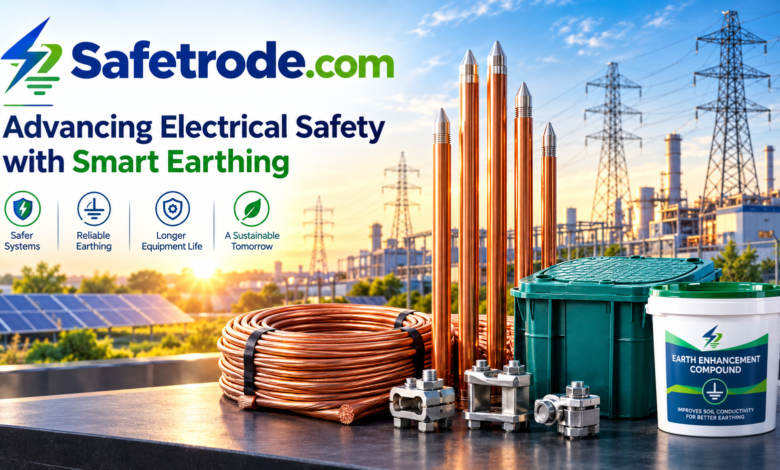
Safetrode.com is associated with Safetrode Industries, a company focused on electrical earthing and grounding solutions. Its product range includes earth energizer compounds, copper-bonded earthing rods, chemical earthing electrodes, earth pit covers, and related accessories. These products are intended to support grounding installations in environments where electrical safety and reliable performance are important.
Understanding these solutions requires more than knowing which products are available. Soil conditions, electrode materials, bonding arrangements, installation quality, and regular testing all influence the performance of an earthing system. This guide explores Safetrode.com, the role of smart earthing, the practical uses of grounding products, and the factors engineers and facility managers should consider when planning electrical protection.
What Is Safetrode.com?
Safetrode.com is associated with Safetrode Industries and its focus on electrical safety and earthing products. The company’s product categories address a fundamental engineering requirement: establishing a dependable electrical connection between an installation and the earth while maintaining appropriate safety conditions.
Earthing, also commonly called grounding, helps control dangerous electrical conditions when faults occur. For example, if insulation fails inside a machine, an effective protective earthing arrangement can provide a path for fault current and help protective devices disconnect the affected circuit. Without suitable protection, exposed metal parts may remain at hazardous voltages.
Safetrode-related products are relevant to electrical contractors, industrial operators, project engineers, and facility managers responsible for grounding installations. However, choosing a product is only one part of the process. The complete system must be designed according to the installation’s electrical characteristics, site conditions, and applicable safety standards.
| 🔗 You may also like: |
|---|
| BodenXT: Green Industrial Transformation |
| RepMold: Mold Replication in Manufacturing |
Understanding the Idea of Smart Earthing
Smart earthing is best understood as a modern, performance-focused approach to grounding rather than a single product or universally defined technology. It combines appropriate electrode selection, suitable conductive materials, sound electrical connections, systematic testing, and maintenance planning.
In some installations, monitoring equipment can also help identify changes in grounding conditions or bonding continuity. Such capabilities depend on the monitoring system installed; they should not automatically be assumed to be features of every earthing product.
The objective is to create a grounding arrangement that performs reliably under expected operating conditions and can be inspected and maintained throughout its service life.
Overview of Safetrode Industries and Its Product Categories
Safetrode Industries is associated with electrical grounding materials and accessories designed for different installation requirements. Its product categories address several parts of an earthing system, from the electrode buried in the soil to materials that support conductivity and the components used for inspection.
The following categories are relevant to understanding the solutions associated with Safetrode.com:
- Earth energizer compounds: Materials intended to improve electrical contact and conductivity around grounding electrodes.
- Copper-bonded earthing rods: Electrodes that combine a conductive steel core with a copper exterior.
- Chemical earthing electrodes: Electrode systems designed to work with conductive backfill or other specified materials.
- Earth pit covers: Covers that protect earthing inspection points while allowing access for testing.
- Supporting accessories: Components used to assemble, connect, inspect, and maintain grounding installations.
Specific product specifications, installation requirements, certifications, and performance guarantees should be verified using current manufacturer documentation. Product suitability depends on the application and local electrical requirements.
Why Is Earthing Important in Electrical Systems?
Earthing is a core part of electrical protection because faults can cause exposed conductive parts to reach dangerous voltages. A suitable protective earthing system helps create the conditions necessary for protective devices to operate and limits hazardous voltage differences between accessible conductive parts.
Its effectiveness depends on the complete electrical installation, not simply on achieving a low resistance measurement at one electrode.
Protecting People From Electrical Hazards
When an electrical fault energizes the metal casing of a machine, a person touching that casing could receive an electric shock. Protective earthing, bonding, and correctly selected circuit protection work together to reduce this risk.
Earthing alone does not guarantee that an installation is safe. Residual-current devices, circuit breakers, insulation, appropriate conductor sizing, and correct installation practices may also be necessary, depending on the electrical system.
Supporting Equipment Reliability
Industrial machines, computers, communication equipment, and automated control systems depend on stable electrical conditions. Poor grounding and bonding can contribute to unwanted interference, communication problems, and equipment malfunctions.
A well-engineered system helps manage fault conditions and provides an appropriate reference for electrical equipment. Surge protection may also be necessary where installations are exposed to lightning-related or switching transients.
Helping Reduce Fire and Infrastructure Risks
Electrical faults can produce dangerous heating and arcing. Proper grounding, bonding, and overcurrent protection help reduce the consequences of certain faults by supporting effective fault detection and disconnection.
These measures must be designed together. An earth electrode or grounding compound cannot independently prevent every electrical fire, equipment failure, or lightning-related incident.
Safetrode Earth Energizer Compound
Earth energizer compound is one of the product categories associated with Safetrode.com. Conductive backfill materials are used in some earthing installations to improve the electrical contact between an electrode and the surrounding soil.
The performance of a grounding electrode depends partly on the resistivity of the soil around it. Dry, rocky, or sandy ground can create challenges because its electrical properties may be less favorable than those of more conductive soil.
A suitable earthing compound may help address these conditions, provided the material is compatible with the electrode, soil, and installation design.
How Earthing Compounds Work
A conductive compound placed around an electrode can improve the effective contact area and create a more favorable electrical path between the electrode and the surrounding ground. Depending on its formulation, the material may also help reduce variations in performance caused by changes in moisture.
Different compounds behave differently, so their composition and application instructions matter. Not every product uses the same mechanism, and performance should not be assumed from the word energizer alone.
Potential Benefits and Important Considerations
When correctly selected and installed, a suitable compound may help:
- Reduce grounding resistance under appropriate soil conditions.
- Improve electrical contact around the electrode.
- Support more consistent grounding performance.
- Address limitations associated with difficult ground conditions.
The material should also be assessed for corrosion compatibility, environmental impact, durability, and maintenance requirements. Compounds that leach harmful substances or accelerate electrode corrosion can create long-term problems.
Engineers should use verified product data and site measurements rather than relying on a general claim that a compound will achieve a particular resistance value.
Safetrode Earthing Electrodes
Earthing electrodes establish the physical connection between a grounding conductor and the surrounding earth. Selecting an appropriate electrode requires consideration of conductivity, mechanical strength, corrosion resistance, installation depth, and expected service life.
Safetrode’s associated product categories include copper-bonded rods and chemical earthing electrodes.
Copper-Bonded Earthing Rods
Copper-bonded rods typically consist of a steel core with a copper layer bonded to its exterior. The steel provides mechanical strength, while the copper surface offers good electrical conductivity and corrosion resistance when manufactured and installed appropriately.
These electrodes are commonly used in building grounding systems, industrial facilities, utility installations, and other applications requiring a durable connection with the earth.
Their performance depends on factors such as copper coating quality, soil chemistry, installation practices, and the condition of connections. Damaged coatings and unsuitable connections can shorten service life, particularly in aggressive soil conditions.
Chemical Earthing Electrodes
Chemical earthing systems use specially designed electrodes with conductive materials or backfill intended to improve the surrounding electrical conditions. Some designs incorporate compounds that interact with moisture or the surrounding soil to help maintain conductivity.
These systems may be considered where conventional electrodes do not provide suitable performance within the available installation area. However, the term chemical earthing covers different designs, and not all systems work in the same way.
Before selecting one, engineers should check the manufacturer’s installation instructions, material safety information, corrosion characteristics, and environmental requirements. The complete system must still comply with applicable electrical safety standards.
Safetrode Accessories and Supporting Products
Grounding installations need more than an electrode. The connections, inspection points, protective enclosures, and conductors must all be suitable for the intended environment.
Earth Pit Covers
Earth pit covers protect accessible earthing inspection points from debris, accidental disturbance, and some environmental exposure. They also help technicians locate and access connections during testing and maintenance.
A properly arranged inspection point can make it easier to check connections, carry out approved measurements, and identify visible signs of damage. Covers should be appropriate for their installation location, including any pedestrian or vehicle loading requirements.
Conductors, Clamps, and Connections
Grounding conductors and connection hardware must be compatible with the electrodes and environmental conditions. Poor connections can introduce additional resistance, deteriorate through corrosion, or become mechanically loose over time.
Correct conductor sizing, suitable connectors, secure installation, and protection against corrosion are essential. These components should be selected as part of the complete grounding design rather than treated as interchangeable accessories.
| 🔗 You may also like: |
|---|
| Bauering Explained |
| Quartz Events Sponsor Matching Companies |
Industrial Applications of Safetrode.com Solutions
Earthing products are used across many sectors because electrical faults can affect both personal safety and business continuity. The right solution depends on the equipment being protected, the electrical distribution arrangement, the site environment, and the applicable standards.
Manufacturing Plants
Factories often operate motors, pumps, production machinery, programmable logic controllers, and automated equipment. These installations need effective protective earthing and bonding to help manage electrical faults and reduce hazardous voltage differences.
Grounding components may also support the reliable operation of control and communication equipment when integrated into a properly designed installation. Regular inspections can identify loose connections, corrosion, and other conditions that may affect performance.
Power Generation and Distribution
Power plants, substations, and distribution facilities require carefully engineered grounding systems. During a fault, substantial current may enter the grounding network, creating voltage differences across the site.
Engineers must consider ground potential rise, step and touch voltages, soil resistivity, and the duration of fault current. Simply installing a rod with a low resistance measurement does not establish that an entire substation grounding grid is safe.
Electrode materials and conductive compounds may form part of the design, but the complete arrangement must be evaluated using appropriate engineering methods and relevant standards.
Commercial Buildings and Offices
Commercial buildings contain lighting systems, elevators, air-conditioning equipment, distribution boards, computers, and other electrical installations. Proper grounding and bonding help protect occupants and maintain the safe operation of these systems.
Office buildings with substantial electronic equipment may also benefit from coordinated surge protection and careful attention to grounding and bonding arrangements. These measures are especially relevant where communication networks and critical business systems must remain operational.
Renewable Energy Projects
Solar photovoltaic installations, battery energy storage systems, and electric vehicle charging facilities introduce additional electrical equipment and system configurations.
Their grounding requirements depend on equipment design, system voltage, inverter arrangements, and the applicable electrical code. Outdoor installations may also need coordinated lightning and surge protection based on the site risk assessment.
Earthing products can support these installations, but they must be selected and installed according to the requirements of the specific system.
Telecommunications and Data Centers
Telecommunications towers and data centers depend on electrical systems that support continuous communication and data processing. Lightning, switching transients, and electrical faults can disrupt sensitive equipment or interrupt services.
Grounding and bonding, coordinated surge protective devices, and appropriate cable routing work together to reduce these risks. Critical facilities may also require monitoring, documented inspections, and planned maintenance to identify developing problems before they affect operations.
Benefits of Choosing Suitable Earthing Solutions
The value of an earthing product depends on how well it meets the installation’s actual requirements. A correctly selected and installed solution can contribute to a safer and more maintainable electrical system.
Improved Grounding Performance
Electrodes and conductive backfill materials can help establish an effective electrical connection with the soil. Where soil resistivity is high, an engineered solution may provide better results than a basic electrode installation alone.
However, lower earth resistance is not the only measure of safety. The grounding system must also provide suitable fault-current paths and control hazardous voltages.
Better Durability
Material quality and corrosion resistance affect how long an earthing installation remains serviceable. Suitable electrode coatings, compatible connections, and appropriate installation practices can reduce premature deterioration.
Long-term durability is particularly important in industrial sites where repairing buried connections can be disruptive and expensive.
Easier Inspection and Maintenance
Accessible inspection points help technicians evaluate connections and perform testing. Clear records of installation measurements, maintenance work, and repairs also make it easier to identify changes in system performance.
These practices support preventive maintenance rather than waiting for an electrical fault or failed inspection to reveal a problem.
Support for Equipment Protection
A grounding system designed alongside protective devices and bonding arrangements helps establish the electrical conditions needed for safe operation. Additional surge protection can address transient overvoltages that ordinary protective earthing alone cannot eliminate.
For businesses, this coordinated approach can reduce avoidable equipment risks and support more reliable operations.
Smart Earthing vs. Traditional Earthing Methods
Traditional earthing systems commonly use driven metal rods, buried conductors, plates, or grounding grids. These methods remain effective when appropriately designed for the site.
Modern approaches may add specialized electrodes, conductive backfill, improved inspection arrangements, and monitoring technologies. The best option is not necessarily the newest or most expensive one; it is the system that meets the project’s safety, performance, environmental, and maintenance requirements.
| Consideration | Conventional approach | Enhanced or monitored approach |
|---|---|---|
| Electrode design | Standard rods, plates, or grids | May include specialized electrodes |
| Soil conditions | Performance depends on soil properties and design | Conductive backfill may help in difficult conditions |
| Monitoring | Periodic manual testing | May include additional monitoring equipment |
| Maintenance | Inspection and testing as required | Can include more detailed records and monitoring |
| Selection | Suitable for many ordinary installations | May be useful for specific technical challenges |
These are general distinctions, not guaranteed differences between every product. A conventional grounding grid can be more suitable than a specialized electrode for some applications, particularly where the installation requires extensive control of ground potential rise.
Factors to Consider Before Installing an Earthing System
Selecting an earthing product should begin with an assessment of the installation rather than a decision based solely on product price or advertised resistance figures.
1. Soil Resistivity
Soil resistivity influences how electrical current spreads through the ground. It varies with soil composition, moisture, temperature, and other local conditions.
A soil resistivity survey can help engineers determine the appropriate electrode configuration and grounding design. Measurements are especially valuable for substations, large industrial installations, and other projects with demanding safety requirements.
2. Electrical System Requirements
The installation’s voltage, available fault current, protective-device characteristics, and earthing arrangement influence the design. Engineers must determine how the system will respond during faults and whether protective devices will disconnect the affected circuit within the required time.
Grounding requirements for a small office differ considerably from those for a power substation or industrial processing plant.
3. Corrosion and Environmental Conditions
Buried metal components are exposed to soil chemistry, moisture, and other environmental influences. Dissimilar metals and incompatible compounds can contribute to corrosion if the system is not designed correctly.
Choose compatible materials and follow the manufacturer’s installation requirements. Environmental acceptability is also important when compounds are used in the soil.
4. Applicable Standards and Testing
Installations should follow the electrical codes and technical standards applicable to their location and purpose. Depending on the project, relevant references may include the IEC 60364 series for low-voltage electrical installations, IEC 62305 for lightning protection, and IEEE 80 for AC substation grounding.
These standards address different aspects of electrical safety and should not be treated as interchangeable. The responsible engineer must identify the requirements that apply to the particular installation.
5. Maintenance and Inspection Access
A grounding system should remain accessible for appropriate testing and inspection. Installation records should document electrode locations, conductor routes, connection details, and baseline measurements.
Testing frequency should reflect the site’s risk, applicable regulations, manufacturer recommendations, and operating conditions. Critical facilities may require more frequent inspections than ordinary buildings.
| 🔗 You may also like: |
|---|
| DigitalRGS: Everything Apple |
| Growth Navigate Funding |
How to Evaluate Safetrode.com Before Choosing a Product
Anyone considering products associated with Safetrode.com should evaluate their suitability using documented technical information. A product’s description can explain its intended use, but specifications and independent verification are needed before making an engineering decision.
Consider the following questions:
- What is the product designed to do? Confirm whether it is an electrode, conductive compound, inspection accessory, or another grounding component.
- Are technical specifications available? Review dimensions, materials, installation requirements, and any stated performance conditions.
- Is corrosion resistance addressed? Check compatibility with the electrode, connectors, soil, and backfill material.
- Are relevant standards identified? Confirm applicable testing reports, certifications, and compliance documentation rather than assuming approval.
- Is installation support available? Complex installations may require guidance from qualified electrical professionals.
- Can the performance be tested after installation? Establish measurable acceptance criteria and retain the results for future comparison.
This evaluation helps purchasers distinguish between general product claims and evidence relevant to their specific project.
Information about product availability, current specifications, certifications, and manufacturer warranties should be confirmed directly through current official documentation. The presence of a product category does not establish a particular performance level or guarantee suitability for every site.
Common Mistakes to Avoid in Earthing Projects
Even suitable products can perform poorly when the installation is designed or maintained incorrectly. Avoiding common mistakes is an important part of electrical safety.
Relying only on a resistance reading: A low earth resistance measurement does not automatically prove that dangerous touch voltages will remain within safe limits during a fault. The complete grounding arrangement must be assessed.
Ignoring bonding requirements: Separate grounding components that are not properly bonded where required can develop dangerous voltage differences. Bonding must follow the applicable electrical design.
Using unsuitable conductive compounds: An inappropriate material may cause corrosion, environmental concerns, or inconsistent performance. Product compatibility and installation instructions should always be reviewed.
Skipping maintenance: Connections deteriorate, buried components corrode, and soil conditions change. Appropriate inspections and testing help identify problems before they become serious.
Treating lightning protection as a separate afterthought: Lightning protection, grounding, bonding, and surge protective devices should be coordinated to reduce dangerous voltage differences and protect connected equipment.
Electrical work should be performed by qualified professionals using suitable procedures and equipment. Grounding installations should never be modified or tested by untrained personnel.
The Future of Electrical Safety and Smart Earthing
Electrical infrastructure is becoming increasingly connected. Industrial automation, renewable energy, electric vehicle charging, telecommunications, and data centers all depend on electrical systems that must operate safely under changing conditions.
These developments increase the importance of reliable grounding, coordinated surge protection, accurate documentation, and planned maintenance. In some applications, monitoring technologies may help operators identify changes in electrical conditions and investigate potential problems earlier.
Future improvements will likely focus on integrating better materials, condition monitoring, digital maintenance records, and more precise engineering assessments. Nevertheless, advanced technology cannot replace correct design, qualified installation, or compliance with applicable safety standards.
For organizations exploring Safetrode.com, the most useful approach is to understand how its earthing products fit into these broader engineering requirements. Product selection should be based on verified specifications, site conditions, and the level of protection the installation needs.
Final Thoughts
Safetrode.com: Advancing Electrical Safety with Smart Earthing highlights an important principle of modern electrical engineering: reliable grounding depends on the performance of the complete system, not simply on the electrode installed in the soil.
Safetrode Industries is associated with earthing products such as earth energizer compounds, copper-bonded rods, chemical earthing electrodes, and supporting accessories. These categories address practical needs in industrial facilities, commercial buildings, energy projects, and other electrical installations.
However, effective electrical protection requires more than choosing a product. Engineers must consider soil resistivity, fault-current paths, bonding, corrosion, surge protection, applicable standards, and long-term maintenance.
For facility managers, contractors, and project planners, the best approach is to select products using verified technical information and a site-specific assessment. When correctly designed, installed, and maintained, an appropriate earthing system helps protect people, supports equipment reliability, and contributes to safer electrical infrastructure.
FAQs
What is Safetrode.com?
Safetrode.com is associated with Safetrode Industries, a company focused on electrical earthing and grounding solutions. Its associated product categories include earthing compounds, copper-bonded rods, chemical earthing electrodes, and supporting accessories.
What products are associated with Safetrode?
The product categories described include earth energizer compounds, copper-bonded earthing rods, chemical earthing electrodes, earth pit covers, and related grounding accessories. Current product specifications and availability should be confirmed through official manufacturer information.
What is an earth energizer compound?
An earth energizer compound is a material intended to improve electrical contact or conductivity around a grounding electrode. Its performance depends on its formulation, soil conditions, installation method, and compatibility with the earthing system.
Are copper-bonded earthing rods suitable for industrial use?
Copper-bonded rods are widely used in grounding installations because they combine a mechanically strong core with a conductive copper exterior. Their suitability depends on the electrical design, soil conditions, coating quality, and applicable standards.
What is the difference between earthing and surge protection?
Earthing and bonding help manage fault currents and dangerous voltage differences. Surge protective devices limit transient overvoltages by diverting or otherwise managing surge energy. Both may be needed because neither replaces the other.