


Bauering is a name associated with Slovakia’s construction sector in several online articles. If you are researching the company, it is important to understand its reported business focus, the types of construction services commonly offered by firms in this industry, and the factors that help customers evaluate a construction provider.
Construction companies play an important role in developing homes, commercial properties, industrial facilities, and infrastructure. Their work can involve planning, material selection, structural construction, renovation, site coordination, and quality control. Understanding these activities helps property owners and businesses make informed decisions when comparing contractors.
This article explores Bauering’s reported background, construction services, project management, safety considerations, sustainability, and the practical questions worth asking before working with a construction company. Because independently verified corporate information about Bauering is limited, specific projects, company history, ownership, certifications, and service availability should be confirmed through reliable company records or official sources rather than assumed.
What Is Bauering?
Bauering is described in some online search results as a Slovakia-based construction company associated with residential, commercial, industrial, and renovation work. However, these descriptions should be treated as reported information until they can be independently confirmed through an official company website, business registry, or other reliable documentation.
The name is connected with construction-related searches, but a name alone does not establish a company’s legal identity, operating location, qualifications, or current business activities. People researching Bauering should distinguish between information repeated across third-party websites and details supported by primary sources.
For prospective customers, the most useful starting point is to establish exactly which business uses the name, where it is registered, and what services it currently provides. This can help prevent confusion with similarly named businesses or unrelated organizations.
Why Is Bauering Being Searched Online?
People may search for Bauering for several reasons. Some may want to learn about its business background, while others may be looking for information about construction services, company operations, or its connection to Slovakia.
Search interest can also arise when a company name appears in business directories, online articles, supplier listings, or construction-related discussions. However, the existence of search results does not necessarily indicate a company’s size, reputation, financial performance, or market position.
A useful company profile should therefore go beyond a short description. It should explain what is verified, what remains uncertain, how the construction industry works, and which checks readers can perform before making a business decision.
| You may also like: |
|---|
| Repmold: Mold Replication and Manufacturing |
| BodenXT: Green Industrial Transformation |
Bauering Company Background and Business Overview
A company’s background helps potential customers understand its identity, experience, and position within a market. For a construction business, this information is particularly important because projects can involve significant financial commitments, contractual obligations, and safety considerations.
When researching Bauering, readers should look for its registered legal name, business address, registration status, management details where publicly available, and official contact information. These details can help establish whether the information found online refers to the intended company.
Company Identity and Registration
The first step is to verify the business through the relevant Slovak commercial or business register, if the company is indeed registered in Slovakia. Search using the exact company name and compare the results with any address, registration number, or legal name supplied by the business.
Registration records can help confirm that an entity exists and identify certain official details. They do not, by themselves, prove that a contractor performs high-quality work, holds every required qualification, or remains active on a particular project.
Customers should also check whether the business operates directly as a construction contractor or provides services through subcontractors. This distinction can affect who signs the contract, who supervises the work, and who is responsible for resolving problems.
Experience and Professional Background
Construction experience can be assessed through completed projects, references, documented qualifications, and evidence of work in relevant building categories. A company with residential experience may not automatically have the specialist expertise required for a large industrial facility.
For Bauering specifically, claims about its founding date, founders, employee numbers, completed developments, or years of experience should not be accepted without reliable evidence. Readers should seek dated project records, client references, official announcements, or other verifiable material.
This approach provides a more accurate understanding than relying exclusively on general descriptions published by third-party blogs.
Construction Services Associated With Bauering
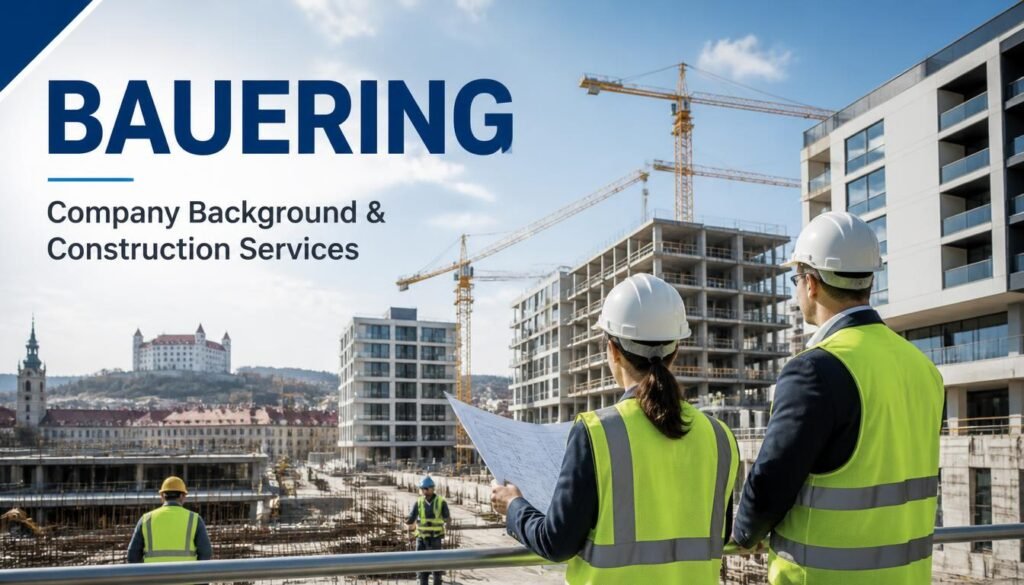
Construction projects vary considerably in their requirements. A family home, an office building, and an industrial facility each need different materials, technical planning, specialist skills, and quality checks. Bauering’s publicly described service areas cover several of these categories, although the exact scope of an individual project should be confirmed directly with the company.
1. Residential Construction
Residential construction involves creating homes designed for everyday living. Depending on the project, this can include foundation preparation, structural work, roofing, insulation, windows, plumbing, electrical systems, and interior finishes.
Homeowners usually have specific expectations about room layouts, comfort, durability, and budget. Effective coordination helps ensure that the construction process follows the approved design and that different trades complete their work in the correct order.
Before appointing a contractor, homeowners should clarify whether the quotation includes materials, labour, technical installations, finishing work, and site cleanup. They should also establish how design changes and unexpected site conditions will be handled.
2. Commercial Building Projects
Commercial construction includes buildings intended for businesses, offices, retail operations, and other commercial activities. These projects often require careful scheduling because delays may affect planned opening dates, tenant arrangements, and business operations.
The work can involve structural construction, internal partitions, flooring, lighting, ventilation, accessibility provisions, and the installation of building services. The final requirements depend on the intended use of the property and applicable building regulations.
For a commercial client, selecting a contractor involves more than comparing initial prices. Relevant experience, programme management, insurance, safety procedures, and the ability to coordinate specialist trades are all important considerations.
3. Industrial Construction
Industrial facilities may require specialised layouts, durable construction materials, technical installations, and arrangements for equipment or production processes. Their design and construction requirements can differ substantially from those of ordinary residential buildings.
Depending on the facility, projects may involve workshops, storage buildings, production areas, loading zones, or other operational spaces. Structural loading, fire protection, ventilation, and safe access may require specialist design and professional assessment.
Although industrial construction is among the sectors associated with Bauering in published descriptions, customers should confirm the company’s relevant experience, technical capabilities, and qualifications before assigning a specialist project.
4. Renovation and Building Alterations
Renovation work improves an existing building without necessarily replacing the entire structure. Common activities include repairing damaged components, upgrading interiors, replacing windows, improving insulation, modernising facilities, and changing internal layouts.
Renovation can be more complicated than new construction because contractors must work with existing structures and may discover hidden problems after work begins. Moisture damage, outdated wiring, deteriorated materials, and structural defects can affect costs and schedules.
A suitable renovation plan should identify the work required, assess known risks, define the project’s limits, and explain how additional work will be approved. Customers should also check whether proposed structural changes require permits or professional engineering input.
| You may also like: |
|---|
| Quartz Events Sponsor Matching Companies |
| Growth Navigate Funding |
How Construction Project Management Works
Project management connects the different activities needed to complete a building project. It helps keep the design, schedule, budget, materials, labour, and quality requirements aligned.
For a contractor providing coordinated construction services, effective project management can reduce misunderstandings and make it easier to identify problems before they cause significant delays.
Planning and Initial Assessment
The process generally begins by understanding the client’s objectives, site conditions, intended use, budget, and preferred completion date. The contractor may review existing drawings, discuss technical requirements, and identify the professionals needed for the project.
A clear scope of work is especially important. It should explain what the contractor will deliver and distinguish included services from work that requires a separate agreement.
Budgeting and Material Selection
Construction budgets may include labour, building materials, equipment hire, transportation, professional services, permits, and waste disposal. The precise cost depends on the location, design, materials, site conditions, and complexity of the work.
Customers should request itemised quotations where practical. Comparing quotations on the same scope of work makes it easier to identify differences in materials, exclusions, allowances, and payment terms.
Cheaper materials do not always produce lower long-term costs. Durability, maintenance requirements, energy performance, and suitability for the building should also influence purchasing decisions.
Scheduling and Coordination
A construction schedule identifies the order in which tasks should be completed. Foundation work, structural construction, roofing, technical installations, and interior finishing generally depend on one another.
Delays can occur because of weather, material shortages, design changes, inspection requirements, or subcontractor availability. A realistic schedule should recognise these risks rather than promise an unsupported completion date.
Regular progress meetings and written updates help clients understand what has been completed, which tasks remain, and whether decisions are needed.
Quality Control and Final Handover
Quality control involves checking that completed work meets the agreed specifications, approved plans, and applicable requirements. Inspections should take place at suitable stages, not just when the building is finished.
Before handover, the parties should identify outstanding defects, confirm the status of required documentation, and agree on how unresolved issues will be addressed. Warranties and maintenance instructions should be retained for future reference.
These practices are relevant when assessing Bauering or any other construction contractor; they should not be interpreted as confirmation that a particular company follows every practice without supporting evidence.
What Is Known About Bauering’s Projects?
Bauering’s online materials describe residential, commercial, and renovation-related work. Some third-party articles also refer to a portfolio of construction projects. However, individual projects should be checked against the company’s own portfolio, project documentation, or other reliable evidence before being described as confirmed achievements.
When reviewing a portfolio, readers should consider three questions:
- Who performed the work? Establish whether the project was delivered by the current legal company, its employees, or another business associated with its team.
- What was the company’s role? Determine whether it acted as the main contractor, a subcontractor, a project coordinator, or a specialist service provider.
- Can the result be verified? Look for project dates, client references, photographs with clear context, and documentation appropriate to the work.
A portfolio is most useful when it demonstrates experience relevant to the proposed project. A collection of attractive building photographs alone cannot establish workmanship, compliance, or customer satisfaction.
| You may also like: |
|---|
| Global Trader Programme |
| Target Company URL Research |
Construction Safety and Regulatory Responsibilities
Safety is a fundamental part of construction. Building sites can involve heavy equipment, working at height, electrical systems, excavations, moving materials, and other hazards. Proper planning and supervision help reduce risks to workers, visitors, and the public.
In Slovakia, construction work must comply with applicable national requirements and relevant European rules. Depending on the project, responsibilities may include risk assessments, worker training, appropriate protective equipment, site supervision, technical inspections, and required authorisations.
The exact obligations depend on the work being performed and the roles of the client, designer, contractor, and subcontractors.
Before hiring Bauering for a project, clients should ask which safety arrangements apply, who is responsible for site coordination, and whether the necessary insurance and professional qualifications are in place. Specialist work should be performed by appropriately qualified professionals.
Sustainability and Modern Construction
Sustainability has become an important consideration for property owners and construction businesses. Building decisions can influence energy consumption, maintenance costs, material use, and the long-term environmental impact of a property.
Several practices can support more efficient construction:
- Energy-efficient insulation: Appropriate insulation can reduce heat loss and improve indoor comfort.
- Efficient windows and doors: Suitable products can help control heat transfer and air leakage.
- Responsible material selection: Durable, repairable materials may reduce replacement needs over a building’s life.
- Waste management: Planning material quantities and separating waste can help reduce unnecessary disposal.
- Efficient building systems: Properly designed heating, cooling, lighting, and ventilation can improve operational performance.
These are general industry practices rather than verified features of Bauering’s specific projects. Customers interested in sustainable construction should ask for measurable specifications, product documentation, and relevant performance information rather than relying on broad environmental claims.
How to Evaluate Bauering Before Hiring
Choosing a construction company requires careful research, especially when a project involves a substantial financial commitment.
The available registration information identifies BAUERING s. r. o. as a Slovak limited-liability company registered in Žilina on 23 November 2023. Its registered business activities include construction, preparatory work, finishing work, and related services. These details can be cross-checked through Slovak business records.
Before entering into an agreement, consider the following checks.
Verify the company. Match the legal name and company identification number with official records. Confirm that the contact details and contracting entity are consistent.
Request relevant references. Ask for examples of completed projects similar in size and technical complexity to yours. Where possible, speak to previous clients.
Review the quotation. Check material specifications, labour, project milestones, exclusions, taxes, and the process for approving additional costs.
Understand payment terms. Payments should be tied to clearly defined contractual arrangements and appropriate milestones. Avoid relying on verbal promises.
Check insurance and qualifications. Confirm the coverage and professional credentials required for the proposed work.
Agree on the contract. The written agreement should define responsibilities, deadlines, variations, defect resolution, payment conditions, and dispute procedures.
Review current information. A company’s registration and historical financial data do not guarantee its current financial condition or the quality of a proposed project. Verify the latest available information before making a decision.
Conclusion
Bauering is associated with the Slovak construction industry through BAUERING s. r. o., a company registered in Žilina in November 2023. Its registered activities include construction, preparatory work, finishing services, and related business operations, while its public-facing descriptions cover a broader range of building and renovation projects.
For readers researching the company, the most important distinction is between documented corporate information, services described by the business, and claims that still require independent verification. A registered company name provides a starting point, but evaluating a contractor also requires evidence of relevant experience, safe working practices, financial capacity, and clear contractual responsibilities.
Whether you are planning a home, renovating an existing property, or researching the construction sector in Slovakia, these checks provide a more reliable basis for making informed decisions than relying on a company description alone.
FAQs
What is Bauering?
Bauering is the name associated with BAUERING s. r. o., a construction-related business registered in Slovakia. Its published business activities include building construction, preparatory work, alterations, and finishing services.
Where is Bauering located?
The company’s registered address is Jabloňová 850/77, 010 04 Žilina, Slovakia, according to published Slovak commercial-register information. Readers should check the latest official records before relying on the address for business purposes.
When was Bauering established?
The commercial-register information lists 23 November 2023 as the registration date of BAUERING s. r. o. This establishes the legal entity’s registration date, not necessarily the beginning of every team member’s construction career.
What construction services does Bauering offer?
Published descriptions associate Bauering with residential construction, commercial and industrial buildings, renovations, and related building work. The specific services available for a particular project should be confirmed directly with the company and documented in a written agreement.
Is Bauering a legitimate company?
Available Slovak commercial-register information identifies BAUERING s. r. o. as a registered legal entity. Registration confirms business identity, but it does not independently establish construction quality, customer satisfaction, or suitability for a particular contract.
Should I hire Bauering for a construction project?
That decision depends on your project requirements and the evidence available. Check the company’s current registration, relevant experience, references, insurance, qualifications, quotation, and contract terms before making a commitment.